When Rebels Win: Power and Violence in Post-Conflict Societies
February 17, 2026
Kai Thaler
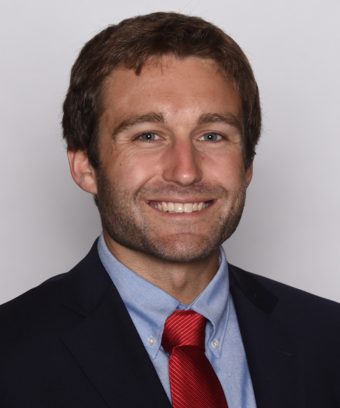
Since 1945, nearly a quarter of civil wars have ended in victory for rebel groups. The stories of how these groups function and fare after their succession of power, however, are complex and varied. In this episode of Talking Policy, host Lindsay Shingler sits down with political scientist Kai Thaler of UC Santa Barbara to discuss his new book, “When Rebels Win: Ideology, Statebuilding, and Power After Civil Wars.” Together, they explore why civil wars have replaced interstate wars as the most prevalent form of armed conflict since World War II, and what these types of struggles for power ultimately mean for their regions and the world when rebels are successful in their attempt to gain control of the state.
This episode was recorded on January 29, 2026. The conversation has been edited for length and clarity. Subscribe to Talking Policy on Spotify, Apple Podcasts, Captivate, or wherever you get your podcasts.
Lindsay: Many of us can remember, in 2021, images of frantic crowds at the airport in Kabul evacuating Afghanistan as the Taliban seized power in that country. Or headlines, more recently, in 2024, as the Assad family fled Syria in the dark of night after ruling for 24 brutal years. In both cases, rebels and revolutionaries captured the state and they remain there today, running the government.
To understand how these kinds of power transitions occur and whether they lead to peace or to further violence, we’re really glad to welcome Kai Thaler to the podcast. Kai is a political scientist at UC Santa Barbara, and he has a new book out called When Rebels Win: Ideology, Statebuilding, and Power After Civil Wars. Kai, welcome to Talking Policy.
Kai: Thank you very much, Lindsay. I’m glad to be here.
Lindsay: So let’s go back to the Syria example. Tell us the story as a kind of opener. What happened in Syria?
Kai: So Syria became a sudden case of rebel victory in late 2024 after over a decade of civil war. The government of Bashar al-Assad was in power in Syria. They were very repressive. Bashar al-Assad had actually taken power after his father, Hafez al-Assad, had already been in control of the state for three decades, so their family was running Syria for about 50 years.
There were initial hopes that Bashar al-Assad was a reformist, that he would potentially move the country in a somewhat more liberal direction than his father. But these were dashed, as he became more and more repressive up until 2011, during the Arab Spring uprisings around the Middle East and North Africa, when Syrians took to the streets to protest and were brutally repressed by the government. People were attacked in the streets. They were killed. They were thrown in prison and tortured.
And initially, activists tried to maintain a mostly nonviolent challenge to the government, but as repression continued and was unrelenting, some began to take up arms. And this wound up resulting in an extended civil war, multiple rebel groups and militias throughout Syria all fighting with the government of Assad, fighting with each other, fighting with Russian forces who intervened on Assad’s behalf. And up to around 2024, in fact, it seemed like Assad had managed to weather the storm. The Islamic State in Iraq and Syria, ISIS, had largely been defeated with international help, and it seemed like Assad was being welcomed back into the international community, at least within the Middle East. But suddenly, in 2024, Hayat Tahrir al-Sham, or HTS, launched a new offensive against the government with support from Turkey, and they managed very quickly to show that this apparent resilience of the Assad regime was quite fragile.
In the face of this lightning offensive, the regime forces quickly collapsed and withdrew. The Assad family fled in the middle of the night to Russia without informing other people in the government. And today, HTS, Hayat Tahrir al-Sham, who are led by a former leader of Al-Qaeda in the region, are governing Syria in what is supposed to be a democratic government when they’re able to hold more comprehensive elections. But there are concerns today that HTS may be trying to consolidate more power for themselves.
Lindsay: Yeah, it’s really wild. I mean, how dramatic, like you said, 50 years of Assads. I was in grad school about a million years ago, and we were studying the first Assad, and then overnight there’s this change, and everyone living in the country suddenly has a new reality. It’s really dramatic.
Kai: No, it was a really sudden change, and one that brought a lot of hope to many people in Syria and elsewhere who had been struggling and suffering for over a decade, if not longer, under the Assad regime. And there’s still some hope that this may be a more democratic Syria that’s being built, but it is a really delicate moment and we’ll have to see how HTS, how other groups within Syria, and the international community navigate it.
Lindsay: So your new book, When Rebels Win, explores why and how rebel groups govern once they’re in power, and it involves a whole array of examples from all over the world. Tell me a little bit about why you wanted to write this book. What’s the background story here?
Kai: Some of my interest in conflict, in war and its effects, probably comes from growing up around Portland, Maine in the 1990s. Maine is still the whitest state in the U.S. But as I was growing up, it became a refugee resettlement center, especially for communities from Somalia, from Sudan, later, increasingly from the Democratic Republic of Congo, and Rwanda.
And so this sparked some interest in what has led people to have to uproot from their homelands and wind up in this very cold part of the U.S. You know, what have their experiences been? When I was an undergraduate, I wasn’t initially quite sure what I wanted to do, and taking some political science courses, I was really drawn to them and to studying conflict and violence. And one semester I had this confluence of things where I was taking a Portuguese language course, I was taking a Portuguese world literature course, and also taking a class on insurgency and violence, and this led me to realize anti-colonial rebels in Angola and Mozambique, who took power at independence, then very quickly had to turn to fighting against new rebellions.
So I wanted to know, how did their experience fighting against the state shape their policies and behavior once they controlled the state? This question of how rebellion shapes what rebels do when they win stuck in my mind. So when I decided to go back to school for my PhD, I knew that would be my focus, but I was initially more set on studying how rebel victors then turned to waging counterinsurgency. As I was refining the project some more, it expanded to look beyond security to other ways that governments affect their populations, and so I began to examine statebuilding and essential services like healthcare and education.
Lindsay: Wow. So this as an interest goes back a long way for you, and my goodness, you have done so much in this space over a lot of territory.
In your introduction, you mentioned that civil wars have replaced wars between countries as the most prevalent form of armed conflict since World War II. Why is that?
Kai: Part of the change after World War II was the dynamics of the Cold War, and the U.S., the Soviet Union, China—all nuclear armed states—trying to avoid open interstate war with each other, but then taking part in civil conflicts in other countries, backing anti-colonial rebels in some places or anti-government rebels elsewhere who aligned with their particular ideologies.
And this was also an era of decolonization, where, in cases where colonial powers were not willing to nonviolently turn over power, populations and groups felt that they had to take up arms to win their independence and freedom. So there was a spike in rebellions around the world. We also saw a new spike for a little while after the end of the Cold War, as some political dynamics were shifting in different parts of the world with the breakup of the Soviet Union, the former Yugoslavia.
But then there was a bit of a dip in the early 2000s and 2010s, some hope that maybe we were in a more peaceful world. And more recently we’ve seen a rise again of both civil wars and very internationalized civil wars, like in Syria or Yemen or Libya, where you have multiple outside countries involved, and some increases in interstate conflict as well.
Lindsay: Yeah. So you mentioned that what drove some of the sheer amount of these kinds of wars was the independence of former colonial countries. In more recent times, is the shape of this, generally, rebels rebelling against dictatorships or is it rebels rebelling against democratically elected governments? Like typically, I guess I have this sort of Syria example in my head where there’s a horribly oppressive regime, and peaceful resistance doesn’t work. It leads to violent resistance and we call those rebels. Is that the typical thing, or is there also the rebellion against democratically elected leaders?
Kai: There’s a little bit of both. So as you mentioned, we tend to think in democracies there’s more institutional avenues to express grievances, to try to change policies, whereas in dictatorships, citizens’ voices are muted or suppressed by the government, and things depend much more on the will of a particular leader or ruling party.
Rebellions can erupt against both democratic and authoritarian governments. Rebels will often say that just because governments are popularly elected, that doesn’t mean the wider political system is democratic. There may still be state repression, marginalization of minorities, and severe economic inequalities. Those criticisms have been raised by rebels in places like Colombia and Nigeria’s Niger Delta Region. Religious rebels today, primarily Islamists, may rise up against democratic governments to try to impose religious law in a country—like Boko Haram, if we stick with Nigeria as an example. And rebellions against democratic governments can be stirred up by foreign rivals. We can clearly see this with the case of Eastern Ukraine before the full Russian invasion.
Lindsay: Your book is concerned about what happens when rebels seize power, but how often do they actually succeed in seizing power?
Kai: Since 1945, so since World War II, rebels have managed to gain control of the state in around one quarter of civil wars, whether that means they took over the central government or they managed to secede and establish a new independent country. While, as I said, rebels do fight against democratic governments, rebel victories have most often occurred in fights against authoritarian governments.
Those governments tend to be highly unpopular. They might be really brittle internally due to leaders’ attempts to control the government, to stop rivals within the government from launching coups. And both of those factors might help rebels win. The Taliban’s 2021 victory is a bit rare in that it toppled, at least in theory, a democratically elected government, though the Afghan national government at the time had serious legitimacy problems because it had relied on U.S. military intervention in Afghanistan to gain and maintain power.
Lindsay: Okay, so let’s dig into one of the examples. I think part of what you’re getting at here is that rebel groups, if we just call them sort of a blanket term, have lots of different motives for why they might want power, what the grievances are, and they might do lots of different things once they gain power. But let’s focus for a minute on one example, the consequences of which are still rippling out across the country. Let’s talk about Iran. So earlier this month, there were giant, nationwide protests against the regime, [which] led to the killing, we think, you know, of thousands of Iranian citizens. We don’t know for sure because there’s been a pretty comprehensive internet shutdown. The Islamic Republic came into being 46 years ago, 1979. Also during a massive uprising, also at a time when there was discontent with the ruling regime. Talk us through this story, what promises in this case were made about the future, and how has this regime succeeded or failed to live up to those promises? And what can we sort of take away from this story about the bigger thing that your book is about?
Kai: In the book, I look at Iran as an example of what might happen when Islamists manage to gain power. Since Islamists are the most common [baseline] ideological type of rebels in the world today, I thought it was really important to examine Islamist victors for the book’s policy relevance, and also to make sure that my theories about how ideology affects statebuilding and governance extend to Islamist groups.
And Iran is a little bit of a unique case, in my book and more generally, in that in 1979 when there was this mass uprising against the Shah, at the time there was not really a clear armed group who managed to be at the forefront of seizing power like we saw with HTS in Syria. The Shah was forced to flee the country when Iran’s military defected—when they said they would no longer suppress protests, so the old regime military actually managed to survive. And there had been a number of different insurgent groups, rebel organizations and popular movements, all opposing the Shah. We associate this revolutionary victory today very much with Ayatollah Khomeini, who then became the central figure in the new regime.
But initially, it was really messy. You had leftist groups, you had certain Islamist groups who weren’t always fully aligned with the ayatollah and his set of clerics. You had localized militias who were aligned with Ayatollah Khomeini and often organized around local mosques. You had ethnic groups, who were trying to establish some greater autonomy or potentially their own homeland in the case of the Kurds.
And in this environment, Ayatollah Khomeini and his particular group of hardline Islamist clerics began maneuvering to gain power and Ayatollah Khomeini was a broadly popular figure. He had been the primary figurehead in the opposition against the Shah, he’d been forced into exile, managed to then come back to Iran, and there was this dual power system for a little while between the Revolutionary Council that Khomeini and certain clerics controlled and the nominal rest of the government, the Parliament, the Prime Minister [and President], and gradually Khomeini and his set of clerics gain control.
So what were they promising people? This was meant to be an Islamist revolution, an imposition of religious law throughout society. But in many ways what Khomeini was promising was also socialist. There were calls for more justice in the distribution of resources, for increased access to education [and] increasing healthcare. And so in addition to establishing an Islamic state with strict religious law, Khomeini, as he consolidated power, also built a new welfare state. This helped build up legitimacy among much of the Iranian population, especially in rural areas who’d felt more excluded under the Shah. And this was also combined with building up a strong security apparatus, as we see today. So there is still this dual nature of a developmentalist state in many ways, and a religious state. But the developmental promises, as we see in these recent protests, are falling apart, in the face of international sanctions and economic mismanagement, and still serious dependence on oil and other commodities.
Lindsay: Mm-hmm. And the religious side, too, is it’s not like there’s some homogenous agreement about that in Iran. There’s a huge diversity of opinion about that. So some of it is also in response to that piece too, right?
Kai: Yes. There’s still many people who want to live in a more secular state. Others who would prefer still an Islamist state, but a much more moderate one. There are minority groups who still feel that their interests are not represented, minority religions like the Bahai who’ve been severely repressed. There’s a wide array of reasons for popular discontent, which helps explain how protests were able to spread so quickly, but that diversity of interests can also be very difficult to organize into a coherent, nationwide protest movement that can last, or develop into a longer term armed insurgency.
Lindsay: You’ve done a lot of fieldwork. You’ve interviewed people in different countries, and so you’ve talked to people who have a very personal stake and role in these kinds of conflicts. Was there a conversation that you’ve had that really struck you as particularly surprising or important, that really made an impact on you in terms of how you think about rebels and civil wars?
Kai: I was really privileged that across Nicaragua, Liberia, and Uganda, over 120 people shared their perspectives and experiences with me. The most interviews I conducted was in Liberia, where there’s a more limited archival or documentary record. And one interview that was very tense, but was also revealing, was with Prince Johnson in Liberia.
Prince Johnson is most notorious for, in 1990, when he was the leader of a breakaway rebel faction in Liberia, torturing and executing former President Samuel Doe on video. Johnson was considered a warlord in many ways. When I was talking to him in 2015, he had entered politics. He was a senator in Liberia, a particularly powerful one, and had also said he’d found God, he’d become very religious. So I went into my conversation with Prince Johnson at one of his houses, so I was on his turf, already a bit wary, you know, knowing this is someone who has committed serious violence, who has tried to avoid accountability. But I wanted to understand his perspective on Liberia’s Civil War and why he had broken away from the National Patriotic Front of Liberia [NPFL], led by Charles Taylor, who ultimately won in Liberia’s civil war and took power. And one thing that emerged was this narrative from Johnson that he had really wanted democracy all along. And the reason why he broke away from Charles Taylor and the NPFL was that Charles Taylor was trying to centralize power. He didn’t want to have elections. He didn’t want to have democracy. Taylor just wanted power for himself.
And I was thinking, alright, this guy’s now an elected official, he’s trying to launder his image. He knows that people think he was a violent warlord, he’s just saying this. And then in talking with other people in Liberia, it became clear that this was a real thing. The account of people who had stuck with Taylor and the NPFL was [also] that Johnson left because of these disagreements. And digging a little further, I found that in 1991, Prince Johnson had actually published a book in Nigeria called The Gun That Liberates Should Not Rule. So this challenged my perceptions of him a little bit, and also showed the value to me of when something surprising happens in an interview, continuing to try to follow that thread.
Lindsay: It’s really interesting, and it makes me think of, I worked in Liberia over the course of a couple of years. This was back in my development days working on USAID projects. And as part of that work, I had conversations with colleagues, Liberians, about the past, “What was life like during the war? How did you know when it was over? How did things get better?” And those were such interesting conversations. Because you think about years of fighting. How is it possible for life to be one way for so long and then start being another?
You think about the ex-combatants, like Prince Johnson. How do you go from fighting—maybe killing—to a bureaucratic job, you know, walking down a hallway, getting coffee, filing the paperwork. And do people just accept that? How do they accept that?
Kai: Yeah, that’s one of the difficulties at times of interviewing people, especially when you know they’ve perpetrated violence. It can take an emotional toll. But you do also start to see other sides of people potentially, and can even feel some sympathy for contemporary problems they might be having.
Most people who fought in Liberia’s civil war, who were in the different rebel groups, who may have committed atrocities themselves, whether they were forced to or did it of their own choice, they’re not doing great today in terms of their socioeconomic status, their ability to be employed, to get sufficient food for their families. And so you can have sympathy there while still keeping in the back of your mind this knowledge of what may have happened in the past.
And I think that’s a challenge of any post-conflict society, too. You are not going to be able to put everyone on trial. You may never have full accountability for everything that happened, and that also might be necessary for stability in the short term or longer term to accept some compromises, which is difficult, and even more difficult often for people who’ve directly suffered, but is a dilemma that people face in trying to build peace after conflict.
Lindsay: So the headlines these days are pretty well dominated by large interstate conflicts. So Russia’s war in Ukraine, China’s saber rattling about taking back Taiwan, even the recent U.S. intervention in Venezuela.
In your book you do say that a return to multipolar great power competition could facilitate increasingly robust insurgencies again. So can we expect great powers—like the U.S., China, Russia—to increase involvement in other countries’ conflicts as part of their increasing competition with each other? Are we headed sort of back to the future, to a reality of these great power proxy wars fueling insurgency, opposition, revolutions, whatever you want to call them. What do you think when you look out ahead?
Kai: I think we’re already there, in many ways. There’s increased great power involvement in civil wars, whether it’s Russia directly intervening in Syria or using the Wagner Group—and now, its successor, Africa Corps—to intervene, usually in support of authoritarian governments facing rebellions in different African countries. We see China playing a heavy role in Myanmar, in helping prop up the military government at the same time as they’ve maintained business relations with many ethnic armed groups there. And the United States remains heavily involved in conflicts in different parts of the world. Drone strikes don’t get the headlines that they used to in places like Somalia or Yemen, but they’re often continuing in these contexts of civil wars. And we’re also seeing new assertions of influence and intervention by regional powers, especially in the Middle East and North Africa. The Gulf States, Iran, and Turkey are competing with each other in different civil wars, whether that’s in Yemen, in Libya, in Syria previously.
And so I think we are in this time where different great powers and regional powers will be trying to counterbalance each other in particular conflicts. And during the Cold War, especially rebel groups who had backing from the Soviet Union, China and the Eastern bloc were able to wage robust insurgencies, where they developed greater military capacity, they had more significant funding than many other rebel groups, and that helped them survive for longer and helped many of them ultimately win and take power. So we can look at, say, HTS in Syria and the role of Turkish support in helping them ultimately topple the Assad regime and say that this sort of thing may already be returning.
Lindsay: Yeah. That’s a sobering end to our interview, Kai, but I really appreciate this conversation. It’s been enlightening.
Kai Thaler, When Rebels Win. Thanks for being on Talking Policy.
Kai: Thank you very much, Lindsay.