Alumni Confidential: Cameran Ashraf
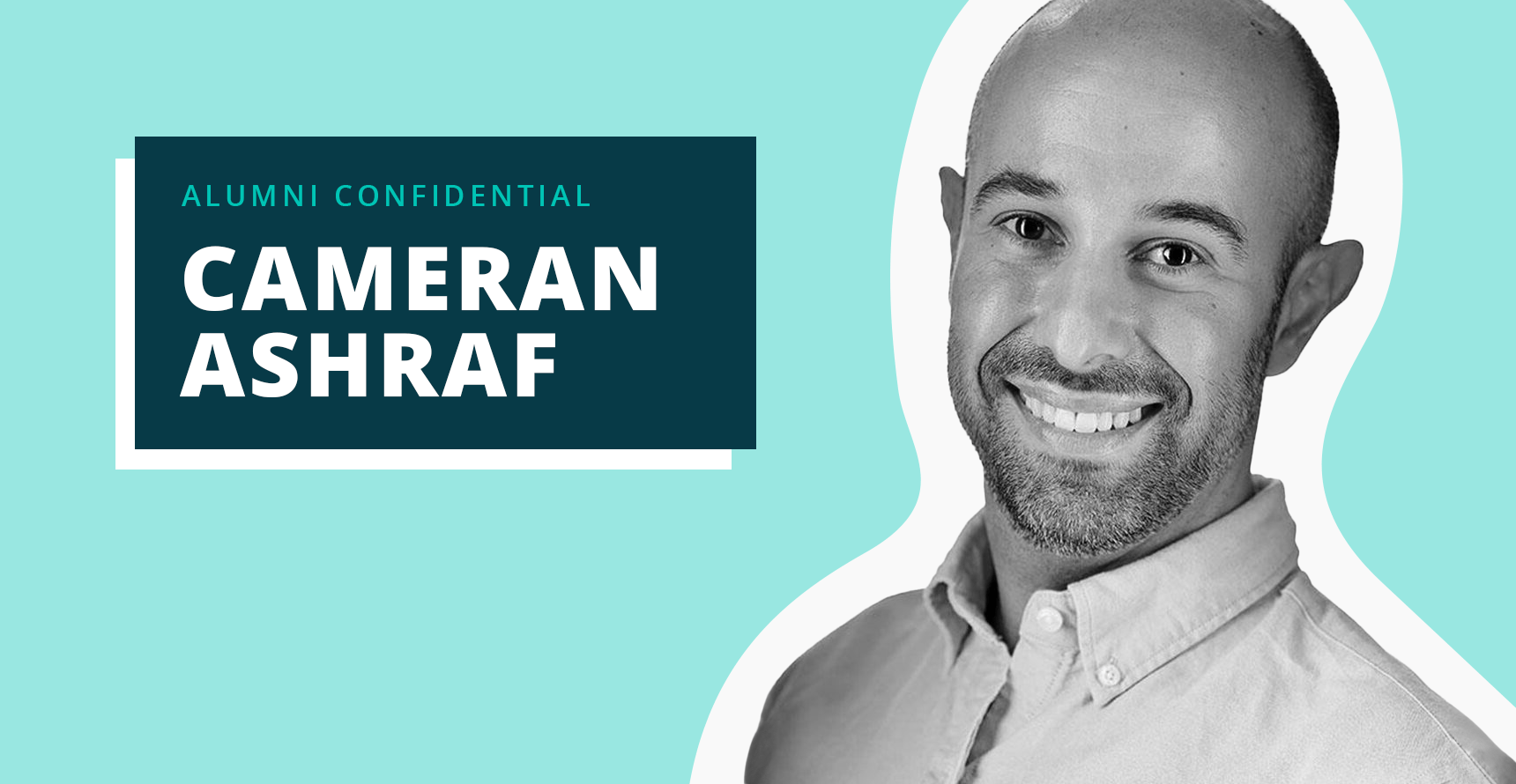
In this Alumni Confidential interview, IGCC’s Tyler Ellison sits down with Cameran Ashraf, an alumnus of the IGCC Dissertation Fellowship program who is now head of Human Rights at the Wikimedia Foundation. Cameran reflects on the experiences that led him down a career path studying human rights, why the challenges to human rights in the 21st century are so different from what we’ve faced in the past, and why he believes a broad academic knowledge base can be so helpful for young scholars hoping to make an impact at the policy level on global issues.
You’re a human rights scholar and a 2013-14 IGCC dissertation fellow. Can you tell us a little bit about your background? How did you get interested in studying human rights?
There wasn’t a linear path. In 2009, there were protests in Iran, and an effort by the government to censor the internet and restrict people. It got under my skin. And I had technical skills, I could develop tools that could help Iranians get around internet censorship. And I discovered that I had a real passion for this. A passion to do the practical work, a passion for the intellectual, scholarly side of things as well as for human rights. It’s one of those moments where your destiny kind of finds you.
As you mentioned, you work at this intersection of human rights but also information technology. Could you give us a sense of what’s at stake here? And why in particular do human rights look different in the 21st-century information age than maybe they have in the past?
A lot’s at stake here! What we can say online, our internet experience, whether or not advertisements are unconsciously trying to manipulate us. The idea of global internet censorship, freedom of information, privacy, et cetera.
These are all at stake in terms of how we understand the world and the amount of space we have to become ourselves.
I think that’s the biggest thing for me. It’s about creating sort of a legalistic and normative framework to allow people to become themselves. We’re in a period of a lot of human rights backsliding, and I don’t believe you can really fully become yourself if you’re constantly having to be worried about what you’re saying and/or wondering if someone’s watching you.
I think the biggest element of this is unchecked AI development. We don’t know where things are going to go and how that’s going to potentially impact human rights. Amid broader democratic backsliding, there’s this question about current technological developments and how they’re going to impact human rights.
Human rights legislation is built around protecting people meeting in-person in spaces, and centralized communication media like newspapers or radio or television: the old-school stuff that is very centralized and easy to identify. But now, few of us are meeting in the basements of abandoned shops to print out anti-government gazettes. Many of us are meeting anonymously online across multiple apps. People are developing memes rather than publishing newspapers, and these are being spread anonymously. So it’s a completely different space.
The basic principles are the same, but human rights thinking hasn’t caught up to where the technology is.
Tell me about your role as the Head of Human Rights at Wikimedia Foundation. What does the organization do?
The Wikimedia Foundation is the parent organization of Wikipedia, which I think most everybody’s heard of. It’s one of the most popular websites on the Internet, and really the backbone of free knowledge around the world. Over two billion people on the planet visit the site every month. One out of every four people is hanging out at Wikipedia at least once a month. And it operates in almost every language on Earth. That’s unparalleled by any other similar-sized website.
But unfortunately, in a lot of countries, the governments don’t like the information that appears on Wikipedia. It can be information about democracy, it can be information about human rights, it can be the truth about atrocities the government has committed, et cetera. And sometimes these governments want to target their Wikipedia editors who are simply reporting the truth. And they will try to take them to court, or conduct internet surveillance. My team comes in, and we support volunteers who are being persecuted because they are involved with Wikimedia projects. We operate globally, and we provide whatever support we can. We work mostly with partner organizations in the human rights and tech field who do a lot of the groundwork. So we’re able to connect volunteers with these partner organizations who then can take that work forward.
You also co-founded Access Now, an international human rights technology organization. Tell us about that project.
Access Now is the world’s largest digital rights organization. It’s focused on supporting users at risk around the world from being surveilled or monitored by their governments. Access Now operates in every country on Earth, supporting human rights activists, dissidents, journalists, academics, lawyers, et cetera.
It sounds like you’re very busy.
Yes, sometimes a little too much.
A lot of your work has focused on Iran. The human rights situation there is generally regarded as very dire—state repression, killing of protesters, discrimination of women and minorities, and communication blackouts. Tell us about your work on Iran and give us a sense of what it’s like for people living there.
I’m half Iranian. My father was Iranian, and my mother also lived in Iran for a long time even though she’s not Iranian. So it’s always been very close to my heart. It’s a part of my everyday life.
Back in 2009, there were big protests across the country. It was called the Green Movement, and it was the first time we saw the internet being shut down or throttled to try to block people from uploading videos with their cell phones filming the protests. The work that I had done for many years on Iran was on anti-censorship and digital security work. I was working to ensure that Iranians could get around internet censorship and do so securely and safely.
The situation, of course, has deteriorated. The Iranian government is much more sophisticated in its digital repression. I still have a lot of colleagues in Iran, and right now, people are facing a really unprecedented crackdown. The Iranian government is trying to identify people that they believe are colluding with the U.S. or Israel and there’s a heightened level of internet censorship [and] internet surveillance going on across the country. So there’s a lot of pressure, in addition to the economic pressure, that has increased as a result of the war. It’s a difficult time.
At a global level, what are the biggest challenges to safeguarding human rights?
It’s really tough because AI is getting integrated into everything, right? And so much of AI is a black box that we just don’t understand. Even the engineers who work on it don’t know. Trying to find a reasonable balance between ensuring AI is developed is a responsible way and that the data that’s used for it is in line with human rights, is our first challenge. And then ensuring that the outputs of these systems are in line with human rights. It’s an enormously complex challenge, and you have a lot of money rushing into the space but a dearth of regulations and protections. So it’s an extremely complex moment for human rights, globally.
And then, outside of AI, you have a lot of social media platforms that have consolidated. There’s only a handful of organizations now. It’s not the way it was back when I got involved, when the organizations were smaller; there was more competition. Human rights are unfortunately being pushed a bit to the side, and the human rights community has to be able to make a more compelling case. We all know why freedom of speech is important, but I think the human rights community is resting on its laurels and assuming people understand what’s at stake. But we have to sell this better, be more effective advocates, and find ways to connect with broad audiences about why protecting human rights in these spaces matters.
Yeah, that makes sense. The whole AI thing reminds me of the Jurassic Park quote, “You spent so much time worrying about if you could, you didn’t think about if you should,” right?
Exactly… We’re not thinking about whether we should right now.
You were an IGCC dissertation fellow from 2013-2014. Tell us a little bit about the impact of that position. How did that experience help you in your career?
First, it gave me a huge boost of confidence that what I was doing was interesting and important. What I thought was really great was that, at least when I was part of it, there was a component where you got to present your research at Lawrence Livermore National Laboratory and connect with folks there who were working on cybersecurity. My dissertation was on the geopolitics of internet control—how governments are trying to control the internet. And to be able to go to such a prestigious place, and have IGCC facilitating my connections with experts in the field there, it gave me an enormous vision that there were career opportunities beyond my PhD. I met other people working in this field. It was a real highlight for me.
A central part of our mission at IGCC is to use academic research to advise and impact policy and decision-making. That’s exactly what you’ve done in your career as a practitioner. Can you just tell us a little bit about what you’ve learned in your experience doing that?
Yeah, obviously I’m biased, but I think that academic expertise is extremely important in policymaking.
One of the challenges is that we see policymaking too narrowly when we think of it as a scope of government. We’re not realizing that so much policy that impacts us every day is actually being made at the corporate level—in the private sector. So our definition of ‘policy’ needs to change. And we need to encourage academics to look at the corporate side of policy, not just government policy, and bring that level of expertise to the table.
An academic can bring their broad knowledge of a broad field, and teach people how to think about the issues more rigorously in their policymaking spaces. Oftentimes, people are hyper-focused on this narrow slice of the pie. An academic can bring a wider and deeper perspective.
There is a lot that’s done in the academic world that could be translated to policy, and it’s not happening enough. That’s a loss for all of us. We need more academics in the policy world. I think academics would benefit from more training on how to take their insights [and] translate them to either government, corporate or industry policy.
What advice would you give to a young scholar who is looking at the future with uncertainty?
First, be sure you’re taking care of yourself. Have some fun. You aren’t going to solve the world’s problems in a day. I’ve worked as an activist, and I would not be able to be as impactful if I didn’t also protect my personal time. You can’t have any impact if you’re burned out. Pick a day of the week to absolutely do nothing.
I would also encourage pre-docs to connect with as many diverse stakeholders as possible. Don’t just focus on academic networks—try to build networks in industry, in government, in the nonprofit NGO world. It’s more work, but it will pay off because you’re going to be a person with a broader understanding, and that matters a lot these days. I think casting your net widely, not getting tunnel vision on just academics, would be my advice.
Another practical recommendation is to read broadly. Too many people pursuing their PhD get too laser-focused on one area. I would recommend reading across fields consistently to get the bigger picture. We’re living in an era where you either have got to be a hyper-focused expert, or you have to have a broad vision. There’s not so much of an in-between. Try to have a lot of deep expertise, but also maintain that broad-based vision; it’s easier said than done, but it has made a huge difference in my career. It’s opened a ton of doors. I can go into so many different conversations and have something to contribute.
My final point would be to really follow your gut. I am a big believer in intuition. It’s absolutely guided my career. Learn to trust your heart. It’s not always right, but it usually knows the right direction.