Novels on Authoritarian Rule VI
Authoritarian systems are a major focal point of social science research; in a previous post, we reviewed a cross section of recent academic and policy-oriented work on the topic. But the social sciences have somewhat less to say about psychological drivers and lived experience—what autocracies look like from the inside and what it feels like to live under dictatorship.
In launching this book review series, we turned up a range of forms, from historical fiction grounded in deep research, to imagined memoirs and the long tradition of the political dystopia. Our last two posts (here and here) reviewed classics of the genre. In this entry, we again consider a cross section of work spanning the postwar period and a range of national experiences: an incredibly prescient short story by E.M. Forester that addresses humans’ relations with machines; an early sci-fi treatment by Robert Heinlin; Augusto Roa Bastos’s classic in the tradition of the Latin American caudillo novel; Philip Roth’s portrait of a fascist United States; an exploration of family and national politics in the Philippines under Marcos by Gina Apostol; Daniel Kehlmann’s recent reflection on a controversial German filmmaker operating under Nazi rule; and a recent piece of speculative fiction by Kenan Orhan that highlights the personal consequences of democratic erosion in Turkey.
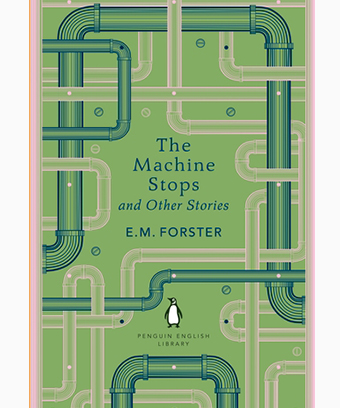
The Machine Stops by E.M. Forster (Penguin Classics 1909 [2011])
A recurrent theme in novels of authoritarian rule is a kind of dystopia of contentment. If everyone appears to be happy and has material and emotional needs met, then what’s the problem if politics is dictatorial? In a more contemporary vein, if an authoritarian regime can raise millions of people out of poverty, isn’t it doing something right? A major advantage of narrative fiction is that it can take claims like this to their limit points, revealing their defects. Should we entrust our future to any available force that can help us lead better lives, even if we are completely subjugated to its power? In the short tour de force The Machine Stops, E.M. Forster foresees telecommunications, social media, artificial intelligence, lockdown life, and, most chillingly of all, our persistent acquiescence in making our lives softer, easier, but ultimately less subject to our own direction.
Forster imagines a world devastated by conflict and environmental degradation, where people have retreated beneath the surface of the earth and entrusted their comforts to a ubiquitous and omnipotent “Machine.” The politics is purposefully shadowy. Who is really in control? But acquiescence is the key to the story. Vashti lives in a tiny hexagonal cell, festooned with buttons to summon food, music, baths, clothing, and communication. She is ferociously busy, with constant audio and video calls with her friends and acquaintances. She spends her time giving and attending lectures and exchanging secondhand ideas. Above all, she appears to be happy. But since a surprisingly modern telecommunications system connects everyone, and because everyone all over the world lives in an identical cell, direct contact seems unnecessary, even risky. She has not seen another human being in the flesh in years, let alone the surface of the planet and what’s left of its natural life.
One day, her son Kuno calls. The Machine has assigned him a cell on the other side of the world. He convinces his mother to take an airship journey across a blighted planet, a trip that puts her in touch with the physicality of the world in a distressing way. Although the journey is relatively easy, it reveals Vashti’s impatience with inconvenience, anxiety about novelty, and her horror of other people. She is “seized with the terrors of direct experience,” and refuses to look at dawn over the Himalayas or the evanescent glow of the stars.
When she arrives, Kuno explains that he has actually been up to the blighted surface, but was captured and brought back by agents of the Machine. The Machine has scheduled him for “homelessness,” effectively a death sentence. But it turns out that Kuno is not exactly distressed; to the contrary. He bemoans his temporary return to the Machine’s “artificial air, artificial light, [and] artificial peace.” He is ultimately revealed as one of a dispersed group of rebels who want to seize freedoms back from an oppressive order dominated by machines.
Although Vashti is quick to deny any religious reverence for the Machine, she furtively worships the Book of the Machine, a sort of phone book with all the necessary information people need to live their hermetically sealed lives. One day, however, the Machine starts to show cracks. Communication becomes difficult and then impossible, light disappears, the air becomes foul, and the corridor outside Vashti’s cell is suddenly filled with desperate, shouting people. After a few days, they all die in darkness, and Vashti and Kuno embrace for the first time as they too are destroyed in an explosion.
The idea that man could be a slave to the machine—and its elite masters—can be found in the Luddites, Marx, and the anarchists. And we are there again. Forster wrote the novel in response to what we might call naive utopianism of the kind he saw in H. G. Wells’s The New Utopia. He argued that technologies designed to ease our lives can corrupt, that technology has a way of escaping our control. We encounter dark hints that the Machine had simply become too complex to understand or repair, a catastrophic instance of complexity-induced fragility. Forster also suggests the Machine had its own distinct interests; think the current preoccupation with “alignment” between AI and human well-being. Writing that man is being “strangled in the garments he has woven,” Forster implies that genuine mastery of technology requires the ability to do without it. He also shows us that sentient technologies—like sentient people—acquire power as they become indispensable, power they can turn to their own ends.
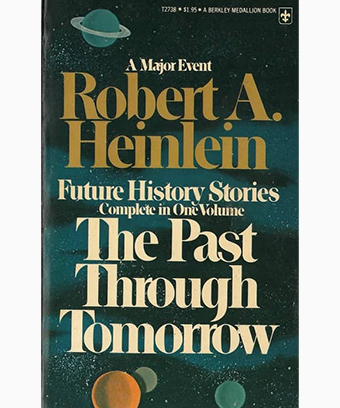
Selections from The Past Through Tomorrow by Robert Heinlein (Ace Books 1987)
Robert Heinlein was among the postwar science fiction giants, crossing over to a huge audience with Stranger in a Strange Land in 1961. His career had a humble beginning. In 1939 and 1940, he published a novella and several short stories in Astounding Science Fiction, a pulpy sci-fi outlet. These were part of a complex “future history” of the United States; the component stories were collected in The Past Through Tomorrow. We consider one of his novellas from this period and a compelling short story:
“If This Goes On…” (1940, expanded 1953)
Heinlein’s science and engineering experience attuned him to technological developments. His fiction is replete with discussions of orbits, ballistics, mechanics, and combustion. But he was also attuned to challenges that lurked at the intersection of psychology, statistics, and medicine. The advances of applied psychology during the mid-20th century suggested that authoritarian states could manufacture their own reality through propaganda and other forms of psycho-social manipulation, including drugs and shock therapy. Some of these accounts were doubtful about the prospects for democracy and self-government, particularly insofar as they assumed citizens making up their own minds. Instead, they explored the alternative possibility of actively inculcating “good” and “correct” beliefs by imitating authoritarian propaganda and manipulation.
In the novella “If This Goes On,” Heinlein explores the choices facing a resistance movement seeking to restore democracy to an authoritarian United States. Heinlein imagines a theocracy ruled by a cynical and lecherous Prophet Incarnate, defended by a military elite and supported by millions of pious, credulous citizens. We follow the unlikely journey of a couple of West Pointers from guard duty at the Prophet’s sinister pyramidal headquarters (New Jerusalem) to central roles in a clandestine insurgency known as the Cabal. This organization is riven by its own internal conflict between a faction committed to replacing the current dictatorship, but inculcating “correct” religious doctrine, and another more libertarian group (Heinlein’s clear preference) committed to freedom of thought.
Heinlein is captivated by the question of benevolent tyranny. He asks whether a resistance movement which elevates its own principles to the level of unquestioned axioms can be any better than the tyranny it replaces. As the character Winters puts it at a decisive meeting of the resistance, “Free men aren’t “conditioned!” Free men are free because they are ornery and cussed and prefer to arrive at their own prejudices in their own way—not have them spoon-fed by a self-appointed mind tinkerer! We haven’t fought, our brethren haven’t bled and died, just to change bosses, no matter how sweet their motives.”
The protagonist, John Lyle, is initially moved by a protective ethical impulse. Despite his grand religious pretenses, the Prophet is sexually exploiting young women and Lyle wants to come to the rescue. But in interacting with the free thinkers of the Cabal he is forced to think outside his narrow moral box. “If This Goes On” has an endearingly sophomoric quality, with substantial space given to blasters, buddies, and breasts. There is, however, a great deal of substance to the story. Heinlein asks whether a democracy relying on free but informed choice can survive our growing knowledge of how those choices can be manipulated.
Coventry (1940)
Heinlein’s protagonist in this short story, David MacKinnon, has been convicted of assault for breaking the nose of a man who insulted him. The future United States in which he lives has abolished violence, along with hunger, poverty, disease, and even bad weather. A court rules that MacKinnon is dangerously unfit to participate in social life. He is given the choice of psycho-pharmacological “correction” or internal exile to a place called Coventry, encircled by an impassable electric field called the Barrier.
MacKinnon is delighted at the prospect of exile; he is a longtime libertarian and disaster prepper. He has visions of living the simple life in virtuous anarchy with his neighbors, trading with them as needed but remaining completely independent. As such, he explores the anti-Hobbesian idea of peaceful anarchy, advanced by current political theorists like John Simmons, Robert Paul Wolff, and David Graeber. On arriving in Coventry, however, MacKinnon is immediately robbed by the first people he meets. He then loses the rest of his possessions through a farcical “customs inspection” by officials of New America, a pseudo-state that emerged organically within Coventry. Other factions on the scene include a totalitarian dictatorship known as the Free State, and The Angels, a remnant of the militarized theocracy defeated in If This Goes On.
Coventry is anything but a libertarian refuge. MacKinnon is smart enough to weigh the alternatives. If peaceful cooperation under anarchy is a chimera, then democratic institutions take on much greater urgency. When the United States is threatened by forces within Coventry, MacKinnon abandons his libertarian posture and takes an active role in protecting the society he once scorned. In a compact short story, Heinlein manages to convey the costs associated with a variety of different political forms: an invasive democracy; an unattainable libertarian utopia; a Hobbesian dystopia.
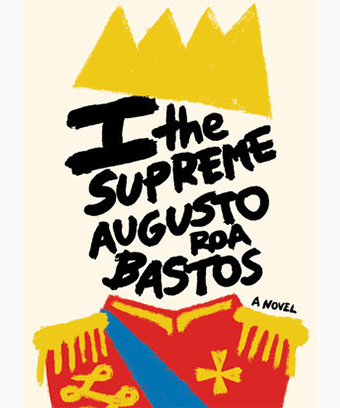
I the Supreme by Augusto Roa Bastos (1974, translated by Helen Lane, Vintage Books [Random House] 1986)
As we have seen, the possibility of benevolent autocracy is at the heart of both populist and technocratic models of government and continues to captivate political theorists to this day. Augusto Roa Bastos’s I the Supreme is a cautionary tale on two counts. First, benevolent dictatorship proves not so benevolent. But second, what happens when the loneliness of absolute power drives the dictator mad?
Dr. José Gaspar Rodríguez de Francia y Velasco led Paraguay as supreme ruler from 1814 to 1840. Francia was an intellectual disciple of the European enlightenment, with a particular passion for Rousseau and Montesquieu, a deep hatred of Spanish exploitation, and a sincere interest in the welfare of the native Paraguayan population. After eliminating and expropriating the relatively thin post-independence elite, Francia settled into a peaceful and unchallenged two decades as supreme autocrat. I the Supreme offers a fictional reconstruction of Francia’s rule and explores the consequences of entrusting a sincere and talented man with absolute power. Despite its modernist complexity, the book quickly became a classic in the caudillo novel tradition.
The novel turns on the simile of dictation: the dictator is the man who speaks, his dictation transcribed by the long-suffering scribe Policarpo Patiño. The novel is made up of the transcript of these dictations, leavened by fictionalized extracts from Francia’s private diaries and quotations from actual contemporaneous accounts of Francia’s rule.
As it turns out, Francia both loves and hates the Paraguayan “people-multitude.” On the one hand they are morally good, upright people, “full of innocence and natural goodness,” who have been continually exploited by foreigners and elites. On the other hand, he considers them unready for self-government, vulnerable to manipulation, and thus requiring his perpetual protection and guidance. “I find myself in a country full of nothing but idiots…” One of Francia’s principal frustrations is the unwillingness of his subordinates to exercise independent initiative or judgment, requiring him to continually step in and make decisions. Francia revels in micromanagement; circumstances “oblige me to turn to myself to get things done…to take care of everything down to the very last detail…I must personally supervise everyone.” And such supervision requires control. He takes steps to ban the printing of books, political discussions, and even secondary education, establishing a vast network of spies and informants in the process. But it is precisely the dictator’s power that blocks initiative. Francia grumbles about the tendency of Paraguayans to refuse eye contact with him and hazards that they must have an extra bone in their necks that makes them look only downward. But all Paraguayans know that they can be executed or imprisoned for life at the slightest transgression.
Francia claims that “my will represents and realizes by delegation the invincible will of a free, independent, and sovereign people.” What happens when such arrogance descends into madness? In Francia’s case, this madness involves a dissolution of the dictator himself into distinct public and private personas. The public persona is depicted as “He,” while the personal pronoun “I” is reserved for the private Francia whom nobody else knows or can know.
Perhaps inevitably, these two selves take sharply different views about Francia’s rule itself. While Francia’s “I” is concerned to justify his every action, the “He” is withering in its unmasking of Francia’s public-spirited pretexts to acquire and retain absolute power (“even you yourself don’t believe it”). Much of the novel is consumed by Francia’s increasingly frantic attempts to justify himself. Yet he knows that he has exploited the incipient nationalism of the Paraguayan people to establish a personal tyranny.
Most of the novels we have surveyed in this series do not attempt to understand the mind of the authoritarian ruler. As Roa Bastos has Francia say, “it’s not possible to make stories of absolute power.” But Roa Bastos captures the contradictions of an autocrat who venerated Benjamin Franklin but found it necessary to ban printing presses, who believed in the rule of reason but tolerated no discussion, and who loved Paraguayans so much that he condemned them to a century of ignorance and penury. He captures Francia’s towering self-righteousness and his equally grandiose self-loathing. As Francia says to one of the Europeans (a botanist) whom he has imprisoned for twenty years, “if you happen, by any chance, to come across the footprint of the species to which I belong, rub it out. Hide the trail.”
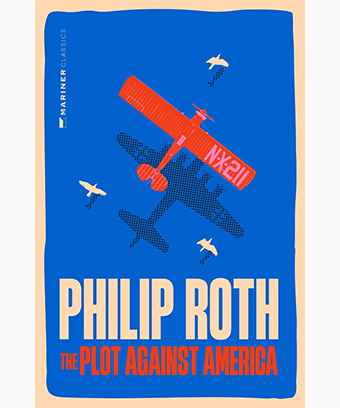
The Plot Against America by Philip Roth (Houghton Mifflin 2004)
Roth’s novel, set entirely in 1940–42, ranks among the great American political dystopias. The premise is simple and bears comparison with Sinclar Lewis’s It Can’t Happen Here. It is 1940, the war in Europe is on, and the public is poised for the elections in the fall. Public opinion on U.S. entry into the war is tilted in a more isolationist direction than it actually was. Charles Lindbergh masterfully exploits his hero status as aviator and not only secures the Republican nomination but prevails in the national election on the simplest of platforms: “vote for Lindbergh or vote for war.”
National-level politics suffuse the novel and are brought to life; an afterword has detailed chronologies of the wide array of historical figures who populate the novel as well. But the power of the book comes from its rich sense of place and the heart-wrenching way that polarization and backsliding generate familial cleavages and stress.
The book is set in in the Weequahic neighborhood of Newark where Roth lived as a child; the fictional family even reside at Roth’s actual childhood address. The narrator is none other than a seven-year-old “Philip Roth.” Roth thus captures political backsliding, crises, and confusion through the eyes of a child. His father Herman is an embittered and angry opponent of American anti-Semitism, repeatedly insisting on his status as a fully assimilated American. However, Roth portrays other segments of the Jewish community as making their peace with Lindbergh in the mistaken effort to show loyalty; some critics took Roth to task on this point.
The family divides in two. A cousin chooses to go fight the Nazis by decamping to Canada. Roth’s mother is less overtly agitated than her husband, but is also persistently attentive to risk. An aunt by contrast is ultimately married to a leading accommodationist rabbi whose connections reach all the way to the White House. Roth’s older brother is enamored with Lindbergh’s verve and falls under his spell. The seven-year-old Roth is navigating all of these challenges while trying to grow up.
Of relevance to understanding authoritarian backsliding is how governments don’t have to directly repress to intimidate. Rather, they provide a permission structure; signals to groups and individuals that they can act on their prejudices. In an early chapter, the Roth family visits Washington in a political and civic pilgrimage. But they face open anti-Semitism. Most psychologically damaging is that Roth’s father is powerless to fight back.
Roth plays out both the international and domestic politics when Lindbergh takes office. Accommodation is quickly reached with both the Germans and Japanese. The risks to European Jews are downplayed by the new administration. Those supportive of Britain and the European victims of fascism are now internal enemies. The war is a “Jewish war.” Public programs are established—apparently innocent enough—to provide opportunities for urban American minority children. But these programs are limited to Jews, and focus on “integrating” them with the “real” America by spending time on a farm. Another program partners with companies to relocate urban Jews away from the East Coast cities altogether.
Walter Winchell, with his incredibly wide audience as a radio personality and gossip columnist, plays a central role in the narrative. The son of Russian Jewish immigrants, Winchell was a consistent voice on the threat of anti-Semitism both at home and in Europe. His professional trajectory in the novel parallels a descent into violence, much of which emanates from society in the form of spontaneous pogroms rather than from the state.
There are numerous ways in which Roth might have ended his story, but he cleverly steers it back to the actual course of history with a kind of restoration. But the novel leaves the characters—and the reader—with a sense of dread. Once these passions against minorities are unleashed, victims will always live with a complex set of fears. Are the really free and protected? Is the torn fabric really repaired? Can the furies be unleashed again?
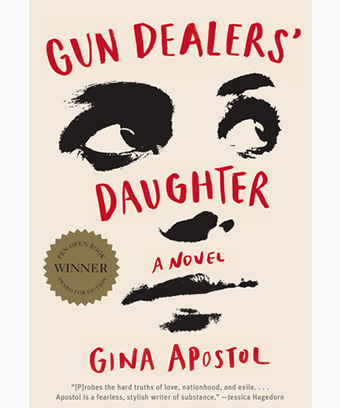
Gun Dealers’ Daughter by Gina Apostol (2010, American edition, Norton 2012)
At one level, Gun Dealers’ Daughter is a coming-of-age story of a bookish Philippine teenager living in the “gilded womb” of elite privilege in Makati. Yet through all her novels (particularly The Revolution According to Raymundo Mata [2009] and Insurrecto [2019], which deals with the Duterte presidency), Apostol’s stories are wrapped up in a colonial history that will not go away.
This novel is set circa 1980, in the late phases of the Ferdinand Marcos dictatorship. Urban opposition to the regime refuses to die, and although treated as background, the New People’s Army is gaining strength in the countryside. As a Cold War treaty ally—and with defeat in Vietnam in recent memory—both the Carter and Reagan administrations watched developments with increasing alarm and upped military assistance to Marcos through expanded counterinsurgency programs.
Yet Apostol’s treatment is far from a black-and-white postcolonial morality play. The parents of Soledad Soliman—who own a trading company—have long historical roots in the country. Her mother is from Leyte and had childhood connections to Imelda Marcos. The book has great scenes of the court politics of the Manila elite, in which connections are everything.
However, Sol’s parents are also physically and culturally footloose. Following the declaration of martial law, they relocated to the United States “until the mobs died down,” and she grows up in a transnational netherworld; at one point she bemoans her inability to grasp nuances in what should be her native Tagalog. Her parents are also embedded in a transnational network of “uncles” who trade in guns, rely on American largesse, and are cynically dependent on Cold War assumptions about how to deal with the mounting opposition to Marcos. Insurgency is not only good for business but necessary for it.
Soledad was set on a path to an elite American university, when she was sidetracked for a semester at the University of the Philippines—the “local college”—because of illness. There she crosses paths with quite different elements of Philippine society including more modest aspirants from the provinces. She is radicalized.
Much of the book rotates around what type of political resistance is appropriate and authentic, real. Can elite kids even legitimately play at that game? She falls into a relationship with a fellow student from an elite family with Spanish roots who is similarly stranded. As their chosen form of political action, they splash “down with imperialism!” in bold red paint. Does that have utility or it just performative; kids-being-kids?
Because of her family’s business connections, Sol is brought into contact with a U.S. colonel, Grier, who Apostol paints as a villain. A burly Vietnam veteran who had spent years in captivity, he was also an amateur historian of the Philippine resistance following the Spanish-American War. Needless to say, he sees the war through a lens very different from the nationalist history that Sol was now imbibing. One of their encounters—framed around a medallion granted to Grier’s grandfather for his service in these horrific wars—compactly showcases the vastly different worldviews of colonizer and colonized.
The denouement of the novel involves a plot that draws Sol and her circle of friends into an armed action planned by the New People’s Army that is way over their heads. The costs of that action are borne very unequally. Sol reflects on how she and her circle live outside the rules and can do whatever they want. “We’ll always have our wealth, we will always have our names. There is something suspicious, dishonest, in playacting revolts. We’re cockroaches.” What role does this comprador bourgeoisie (Sol’s usage) play? Or more precisely, how complicit are they and do the sins of the parents—or the whole generation—pass down to the daughters? Note that the novel is Gun Dealers’—not Gun Dealer’s—Daughter.
The novel involves an interesting yet at times perplexing literary device. Sol is afflicted with anterograde amnesia, a condition that blocks the formation of new memories following a trauma. Apostol will periodically repeat a prior passage verbatim or have Sol revisiting—and challenging—an earlier memory. What is true? Her focus on memory is relevant for Apostol’s efforts to examine how autocracy in many settings is inextricably linked with colonial pasts.
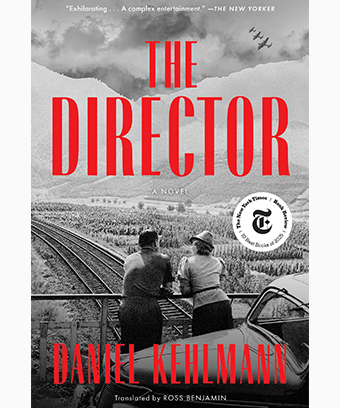
The Director by Daniel Kehlmann (Summit Books 2025; translated by Ross Benjamin).
The Director is a penetrating character study of the German film director G.W. Pabst (1885–1967), who is best known outside of Europe for The Three Penny Opera (1931). The social milieu of the novel is the transatlantic and European film world. A variety of well-known characters move through it or around its edges—Greta Garbo, Louise Brookes, Leni Riefenstahl, D.W. Griffith—as well as other luminaries of Weimar cinema. The premise of the book centers on an enduring mystery in Pabst’s career that has preoccupied film historians: his decision to return to Austria after the Anschluss and continue his filmmaking during the war under Nazi sponsorship. The book rotates around the role that art plays in authoritarian systems and whether its subversive role can be sustained.
Pabst had been lured to Hollywood for reasons that appear as much artistic as political, joining the European diaspora in the early 1930s. The project that brought him to LA proved a commercial failure. Kehlmann portrays Pabst—with limited English—as unmoored from the exalted status he had enjoyed in Germany.
When drawn back to Austria by an ailing mother he is quickly brought face-to-face with the inverted social orders that recur across authoritarian fiction. He owns a small and dilapidated castle, and in a stunning scene he has to deal with a caretaker, Jerzabek, who reflects the petty tyranny that autocratic rule can unleash. Local group leader Jerzabek comes to occupy the upper floors of the decaying house while Pabst, his wife Trude, and son Jakob are relegated to the servants’ quarters below.
The family is trapped with the invasion of Poland in September 1941. The presence of a director of such stature does not elude Nazi intelligence. An entire chapter is devoted to a fictionalized conversation between Pabst and Goebbels. Art in authoritarian regimes is typically brought to heel, sometimes quite crudely, in the form of stilted social realism or pure propaganda. But Goebbels recognizes that it would be a waste for Pabst to direct newsreels; there is just enough of a hint of artistic liberty—and a return to the spotlight.
Pabst bites and compromises ensue, including an extended treatment of a Leni Riefenstahl film on which he is relegated to the role of an impotent assistant. He makes two other films under Nazi aegis (The Comedians, 1941, and Paracelsus, 1943). The novel’s denouement centers on a film that was assumed lost. In it, Pabst refashions an insipid novel by a darling of the Nazi elite into a more troubling morality tale in which the brutality of the law becomes a focal point. But the very making of the film involved monstrous compromises. Pabst either swallows these in the name of his art or is oblivious. On the way back from a glitzy premier, Kehlmann has Pabst and his wife reflecting on the recent past, including his acceptance of a prize at the Venice Film Festival where he was honored under swastikas and Fascist flags:
“‘An award like that changes nothing. The only thing that matters is whether you’ve made a film that endures.’
‘And did we?’
‘I’m afraid not.’”
The lack of reflection is stunning. Pabst continues to make films in the postwar period and several are designed to recapture his sympathy with the opposition to Hitler (most notably The Trial [1948] and Jackboot Mutiny [1955] on the plot to assassinate Hitler). Pabst is portrayed as a man obsessed with seeing the world through a cinematic lens and with an ambition to greatness. Kehlmann’s novel is ultimately about deals with authoritarian devils and their personal as well as professional costs.

The Renovation by Kenan Orhan (Farrar, Straus, and Giroux 2026).
Authoritarian takeovers always produce exiles: those who are at risk—sometimes through little fault of their own—hunted or simply unable to keep their heads down. Kenan Orhan’s novel centers on Dilara, a young psychologist who by her own admission is not particularly political. She admits her friends are frivolous, shallow. Her husband is anxious and risk averse. But her father, depicted as an academic and novelist of modest stature, is a fervid critic of the Recep Tayyip Erdoğan regime. Coming of age during the military regimes of the 1970s and 1980s, he sees political decay in Turkey as replaying the unpleasant path of his youth. His writing triggers an attack by an extremist, which in the upside-down world of an increasingly authoritarian regime leads to his own ban from the university system. Dilara loses her job as well and she decamps with her husband and father to the mountains of western Italy.
The intriguing device of the book comes on its very first page. Dilara and her husband order a bathroom renovation to accommodate her father’s decline from Alzheimer’s; the novel rotates in no small measure around the trying role of care provider. But she finds that the new room has been remade into a cell in Istanbul’s sprawling Silivri Prison. Initially incredulous, she furnishes it with family heirlooms and it becomes a kind of refuge. She has contact with guards and ultimately other incarcerated women. Solidarities form.
Those solidarities are rooted in political developments in Turkey, which are not incidental to the storyline but integral to Dilara’s political awakening. Those events start with the Gezi Park demonstrations of 2013, which combine environmental and political grievances, and run through Erdoğan’s consolidation of political power, particularly in the wake of a botched coup in 2016 that provides the excuse for a wide-ranging crackdown on opposition forces. The politics is not just about concentrated political authority, though. Authoritarian regimes typically have wider projects. Erdoğan’s rule is marked by ongoing conflicts with the Kurdish minority, exacerbated by the Syrian civil war, and a corrupt building spree that remakes Istanbul and other cities and is tragically exposed in the massive earthquakes of 2023. Particularly important for Dilara is the conservative religious turn with its myriad adverse implications for the women she encounters in Silviri.
Memory plays a critical role in the novel; Dilara’s father has Alzheimer’s and is losing his memory while being in exile, which triggers intense nostalgia and an effort on Dilara’s part to recollect her past life. Exile is doubly layered with loss. “For every exile,” Orhan writes, “there is a family of hostages, a host of lovers, friends, colleagues, rivals, affable greengrocers, lascivious taxi drivers—all left behind in their hostage’s bindings, and the country calls out that it misses you, don’t you miss it back?” Not only does she miss her Turkey—the personal Turkey of her previous life—but she comes to see that Erdoğan has irreversibly redone the country; that the old order is lost.
Matthew Draper is a Ph.D. candidate in the department of political science at UC San Diego, and incoming assistant professor of political science at Dickinson College. Stephan Haggard is distinguished research professor at the UC San Diego School of Global Policy and Strategy and research director for Democracy and Global Governance at IGCC.

Global Policy At A Glance
Global Policy At A Glance is IGCC’s blog, which brings research from our network of scholars to engaged audiences outside of academia.
Read More